
.png)
What Does Swag Mean? Definition, Examples, and Business Impact
What is swag?
Swag is branded merchandise that companies give to employees, customers, prospects, and event attendees. Popular company swag includes apparel, drinkware, bags, tech accessories, notebooks, and welcome kits for new employees.
Companies use swag to build brand awareness, recognize employees, welcome new hires, engage customers and prospects, and create memorable event experiences. The most effective swag is useful, high-quality, relevant to the recipient, and connected to a specific moment or business goal.
The concept may sound simple, but it has evolved significantly over the past few years. What was once considered low-cost promotional merchandise has become a strategic tool for shaping employee experience, influencing customer relationships, and reinforcing brand identity.
Swag is more than randomly giving away pens and stress balls.
The short version: Company swag is branded merchandise designed to create a connection between a recipient and a brand.
What Does "Swag" Mean In Business?
In business, swag refers to branded merchandise or gifts that a company gives to employees, customers, prospects, or event attendees. Company swag can be branded with a logo. Common examples are branded apparel, drinkware, bags, tech accessories, notebooks, and other useful products.
Swag stands for "Stuff We All Get," a phrase that originated at trade shows and events in reference to giveaways attendees received.
Today, company swag goes far beyond giveaways. Companies use it to welcome new employees, recognize milestones, strengthen company culture, build customer relationships, support sales and marketing campaigns, and create memorable brand experiences.
Why Do Companies Use Swag?
Businesses use swag for many reasons, including employee onboarding, recognition, company events, conferences, customer appreciation, sales outreach, and holiday gifting.
Companies use swag to build brand awareness, strengthen employee engagement, recognize important moments, nurture customer relationships, support sales and marketing efforts, and create memorable experiences.
Swag plays a starring role across the employee and customer journey, creating meaningful touchpoints that help people feel connected to a company and what its brand stands for.
Companies use swag to:
- Welcome new hires with curated onboarding gifts that create a memorable first impression
- Celebrate work anniversaries, birthdays, or other key personal moments
- Thank clients with thoughtful branded gifts
- Celebrate holidays and seasonal moments with gifts that bring teams together
- Build brand awareness at trade shows and events with useful, conversation-starting giveaways
- Recognize team wins and great work with something tangible that shows appreciation
- Stand out in sales outreach and create a memorable touchpoint
- Reward brand ambassadors and referrals with something that reinforces their connection to the brand
Whether the goal is engagement, appreciation, awareness, or growth, the best swag connects the right item with the right person at the right moment.

Does Company Swag Work?
Yes. Thoughtfully chosen company swag can strengthen employee pride, connection, and engagement while keeping a company’s brand present in employees’ everyday lives.
According to Snappy's 2026 Workforce Study, which surveyed 1,500 full-time U.S. employees:
- 87% of employees say they feel proud of their company when wearing company swag
- 79% say company swag makes them feel more connected to their colleagues
- 88% say gifts increase engagement and collaboration
The short version: Swag can be more than free merchandise. When it is useful, relevant, and thoughtfully chosen, it can become a tangible reminder of belonging, appreciation, and connection to a company.
And because swag lives on in a physical sense — on desks, in homes, in closets, and out in the world — it can continue reinforcing that connection long after it has been received.
What Makes Company Swag Effective?
Company swag is most effective when it is useful, high-quality, relevant to the recipient, and connected to the right moment. The goal isn't simply to put your logo on something. It's to choose swag that people will genuinely want to use, wear, or keep.
The most successful swag programs have a few things in common:
Personalized: One-size-fits-all rarely fits everyone. Consider the recipient, audience, and occasion when choosing what to send.
Choice-driven: People have different tastes, needs, and sizes. Giving recipients options allows them to choose something they actually want, making the experience more personal and reducing the chance that swag goes unused.
Practical: Utility goes a long way. Think reusable water bottles, cozy socks, bags, or tech accessories that can become part of someone's everyday routine.
Quality-first: Throwaway items can send the wrong message. Quality swag reflects the care and thought behind the gesture and can positively reinforce how recipients perceive your brand.
Aligned with your brand: Every item you send is an extension of your brand. The product, design, materials, and packaging should feel consistent with your company's identity.
Timed to the moment: Swag is more meaningful when it's connected to a specific occasion, whether it's a new hire's first day, a team achievement, an event, or a milestone anniversary.
The best company swag puts the recipient first. Instead of asking, “What do we want to give?” start with, “What would this person actually want to receive?”
What Are Examples of Company Swag?
Common examples of company swag include branded apparel, drinkware, bags, tech accessories, notebooks, wellness products, and employee welcome kits. The best swag items are useful, high-quality, and relevant to the people receiving them.
Today, great swag does more than fill a free tote bag.
- It welcomes.
- It celebrates.
- It recognizes.
- It says, you matter.
Swag can range from premium apparel and sleek tech gear to everyday essentials and thoughtfully curated kits.
What matters most is the intention behind it. When swag is thoughtfully chosen and delivered at the right moment, it goes from being “just stuff” to a powerful way to show appreciation, boost morale, and keep your brand top-of-mind.
Company swag can take many forms depending on your audience, budget, occasion, and brand:
Apparel: Hoodies, T-shirts, jackets, hats, beanies, and socks.
Drinkware: Mugs, tumblers, reusable water bottles, and travel cups.
Tech accessories: Wireless chargers, Bluetooth speakers, headphones, and other useful tech.
Office and everyday essentials: Notebooks, bags, pens, desk accessories, and organizers.
Self-care and wellness: Blankets, candles, fitness accessories, and other products that support well-being.
Eco-friendly items: Reusable totes, drinkware, plant kits, and products made with more sustainable materials.
Custom kits: Curated collections of products for employee onboarding, events, milestones, holidays, and other specific moments.
Choosing the right swag isn't about what you like. It's about what your recipient will actually use and appreciate.
How Different Teams Use Company Swag
Different teams use company swag to support different business goals, from employee engagement and brand awareness to sales outreach and customer retention. The most effective programs start with the audience a team wants to reach and the outcome they want to influence.
HR & People Teams
- Welcome new employees and strengthen onboarding
- Recognize milestones and achievements
- Build connection and belonging across teams
Marketing Teams
- Extend campaigns into physical brand experiences
- Increase visibility at events and conferences
- Expand brand awareness and advocacy
Sales Teams
- Create memorable touchpoints with prospects
- Stand out during long or competitive deal cycles
- Celebrate closed deals and new customer relationships
Customer Success & Loyalty
- Recognize new customer milestones
- Strengthen relationships around renewals
- Celebrate expansion and long-term partnerships
Across teams, swag turns an important business moment into something tangible and memorable.

Employee Swag vs. Customer Swag: What's the Difference?
Employee swag is often used to strengthen the employee experience. Companies may send it to welcome new hires, recognize achievements, celebrate anniversaries, build team connection, or mark company milestones. The goal is often to help employees feel appreciated and connected to the organization.
Customer swag is typically focused on strengthening an external relationship. It can be used to thank a new customer, celebrate a partnership milestone, support an event, recognize a renewal, or create a memorable touchpoint throughout the customer journey.
The audience may be different, but the same principle applies: the best swag starts with the recipient rather than the product. Consider who is receiving it, why you're sending it, and what would make the moment meaningful before deciding what belongs in the box.
How Do You Build a Strong Swag Strategy?
Snappy's 4-Part Swag Strategy Framework
1. Moment: When should you send swag? Start with the occasion. Onboarding, recognition, milestones, events, customer moments, and sales outreach can all create opportunities for swag. Connecting what you send to a specific moment gives the gift context and makes the experience more meaningful.
2. Audience: Who are you trying to reach?
Employees, customers, prospects, partners, event attendees, or another important group.
3. Emotion: What do you want them to feel? Belonging, excitement, gratitude, pride.
4. Outcome: What business goal are you supporting? Retention, engagement, loyalty, pipeline acceleration.
Together, these four elements help determine what to send, when to send it, and how to create an experience that supports the larger goal.
Common Swag Mistakes To Avoid
To make the most of your swag budget, steer clear of these pitfalls:
Sending without strategy: Swag needs context. Random, one-off sends feel transactional. Tie your gifting to clear programs or milestones.
Over-branding: Not every surface needs a logo. Subtlety and good design go a long way. Let the product speak, not scream.
Assuming one-size-fits-all: What works for tech engineers might not land with retail associates. Giving your recipients choice can make swag more relevant while reducing the likelihood that products go unused.
Ordering too much: Buying large quantities upfront can leave companies with unused inventory, outdated designs, or products no one wants. Consider actual demand and whether an On Demand swag approach makes more sense.
Taking on logistics alone: Swag doesn’t have to mean storing boxes in your office. Snappy helps manage inventory, fulfillment, and shipping, so you can focus on impact, not operations.
How Can Companies Avoid Swag Waste?
Companies can reduce swag waste by ordering more intentionally, minimizing unnecessary inventory, and choosing products that are likely to stay relevant and useful over time. The goal is to avoid ending up with boxes of unused merchandise, outdated branding, or products that never reach a recipient.
To build a more efficient swag program:
- Order based on actual demand: Avoid purchasing large quantities simply to meet projected needs that may change.
- Use On Demand swag when appropriate: Producing items as they're needed can reduce excess inventory and eliminate the need to store merchandise upfront.
- Choose products with staying power: Prioritize useful, high-quality items over novelty products that may quickly lose their appeal.
- Be thoughtful about customization: Highly specific designs, dates, or campaign messaging can make leftover merchandise difficult to reuse.
- Plan for changing brand needs: Consider how long products will remain relevant before committing to large quantities.
- Track what gets used: Look at which products and programs generate the most interest to help inform future orders.
The best way to reduce swag waste is to be intentional about what you produce in the first place. A more flexible, demand-driven approach can help companies create better swag experiences without accumulating merchandise they don't need.
What Are the Benefits of Giving Recipients a Choice of Swag?
Giving recipients a choice of swag makes it more likely that they receive something that fits their tastes, needs, size, and lifestyle. Instead of assuming the same product will appeal to everyone, companies can offer a selection of items and let each person decide what works for them.
Recipient choice can be particularly useful for:
- Apparel, where sizes and style preferences vary
- Distributed and global teams with different needs
- Large employee populations with diverse interests
- Customer and prospect programs where preferences may not be known
- Programs designed to reduce unused or unwanted merchandise
Choice can also make the experience feel more personal. The company still creates the moment and sets the parameters, while the recipient gets a say in what they ultimately receive.
How Do Companies Send Swag to Remote and Global Employees?
Companies can send swag to remote and global employees by using a swag platform to manage recipient information, product selection, sizing, fulfillment, and international shipping from one place.
For distributed teams, recipient choice can be particularly valuable. Instead of trying to predict what every employee wants or collecting sizes and shipping information manually, companies can let recipients choose from available products and provide their own delivery details.
When planning swag for distributed teams, consider product availability, international shipping, sizing, address collection, inventory, and the recipient experience across different locations. Employees shouldn't receive a less thoughtful experience simply because they work somewhere other than company headquarters.
How Do Companies Measure the ROI of Swag?
The best way to measure swag ROI depends on the goal of the program. Companies should define what success looks like before sending anything, then track the metrics most closely connected to that outcome.
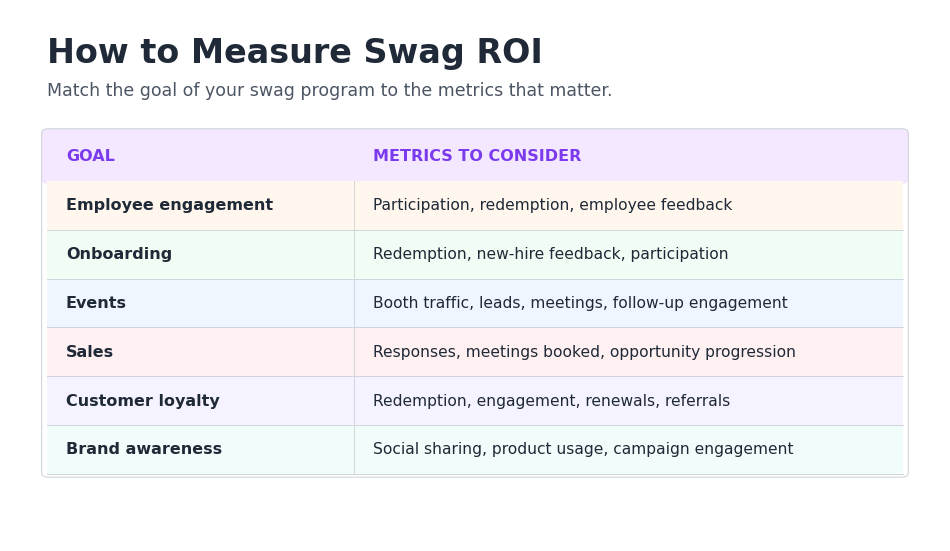
The right metrics will vary by program. An event campaign might focus on leads and follow-up engagement, while an employee program may look at participation, redemption, and feedback. The important thing is to connect measurement back to the goal you established before the swag was sent.
Build a Swag Program That Works
Whether you’re launching a new product, onboarding new employees, or looking to stand out in sales outreach, swag can help.
But the key is strategy. When it’s curated with care, timed with intention, and delivered seamlessly, swag becomes more than just a gift. It becomes a tool.
That’s where Snappy comes in.
Send swag people actually want without the guesswork or inventory headaches. Snappy gives you:
- Flexibility across use cases and team sizes
- Customizable swag collections for every moment
- Seamless branding and packaging
- Global reach
- On Demand options – no inventory required

