

Employee Appreciation Day has grown from a calendar reminder into one of the most strategic moments of the year for HR leaders.
What was once a signal to share a simple gesture like a quick thank you or a team lunch now sits at the intersection of employee recognition, engagement, retention, and performance. For HR leaders planning in 2026, it’s no longer just about being thoughtful. It’s about being effective.
Done well, Employee Appreciation Day sets expectations for how people will be recognized, motivated, and supported for the rest of the year. Done poorly (or ignored entirely), it becomes a missed opportunity that shows up later as disengagement, turnover, and cultural drift.
In this blog post, we’ll share:
- What Employee Appreciation Day actually is (and why it exists)
- Why it matters now more than ever
- What employees say about recognition in 2026 (backed by data)
- Practical employee appreciation ideas
- Why recognizing employees with Employee Appreciation Day gifts and swag turns out to be very good for business
- How leading HR teams use Employee Appreciation Day to anchor year-long recognition strategies
What is National Employee Appreciation Day?
National Employee Appreciation Day takes place on the first Friday of March every year. In 2026, that’s March 6, which also kicks off Employee Appreciation Week (March 6-13).
It was originally introduced in the 1990s to encourage companies to recognize employees for their contributions. At the time, work looked very different:
- Most teams were in the same office
- Careers were more linear
- Burnout wasn’t a regular topic of concern
- Employees weren’t reachable by multiple devices at all hours of the day, every day
Fast-forward to today:
- Teams are distributed
- Work is constant
- Expectations are higher
- Turnover is expensive
- Employees are far more transparent about why they stay and why they leave
Employee Appreciation Day has evolved alongside those realities.
It’s no longer about checking a box. It’s about setting the tone for how recognition, motivation, and performance work all year.
Employee Appreciation Day Is Part of HR Strategies
Q1 is when everything is defined:
- Company goals
- Cultural priorities
- Budget allocation
- Leadership messaging
- Manager expectations
Employee Appreciation Week sits in the center of all those events. That timing matters.
Recognition delivered early in the year:
- Signals what behaviors are valued
- Shapes how employees interpret company culture
- Establishes whether appreciation is symbolic or systemic
- Creates momentum that compounds
Yet, according to Snappy’s 2026 Workforce Study:
- Only 40% of employees say their company celebrates Employee Appreciation Day
- 66% of employees whose companies don’t celebrate it, wish they did
That’s a massive opportunity hiding in plain sight.
The State Of Employee Recognition in 2026
Snappy’s 2026 Workforce Study surveyed 1,500 full-time U.S. employees to understand how recognition, motivation, and gifting impact real workplace behavior.
The main takeaway: recognition is inconsistent at best.
Recognition is Unreliable
- Only 32% say their company almost always gets appreciation right
- 47% say only sometimes
- 21% say rarely or never
In other words:
Engagement exists. Consistency does not. Inconsistency is where companies quietly lose retention, motivation, and performance.
Why Surface-Level Recognition Falls Short
Most organizations try.
- Pizza lunches
- All-hands thank you emails
- “Great job!” Slack posts
Employees notice the effort. They also notice when recognition feels rushed, generic, or disconnected from real contributions.
This isn’t from lack of trying on HR’s part. It’s a system problem.
Recognition is often:
- Under-resourced
- Spread across multiple tools
- Dependent on a manager remembering to do it
- Competing with urgent priorities
When recognition relies on best intentions instead of structure, it becomes unpredictable. Unpredictable programs erode trust.
What Makes Recognition Actually Work
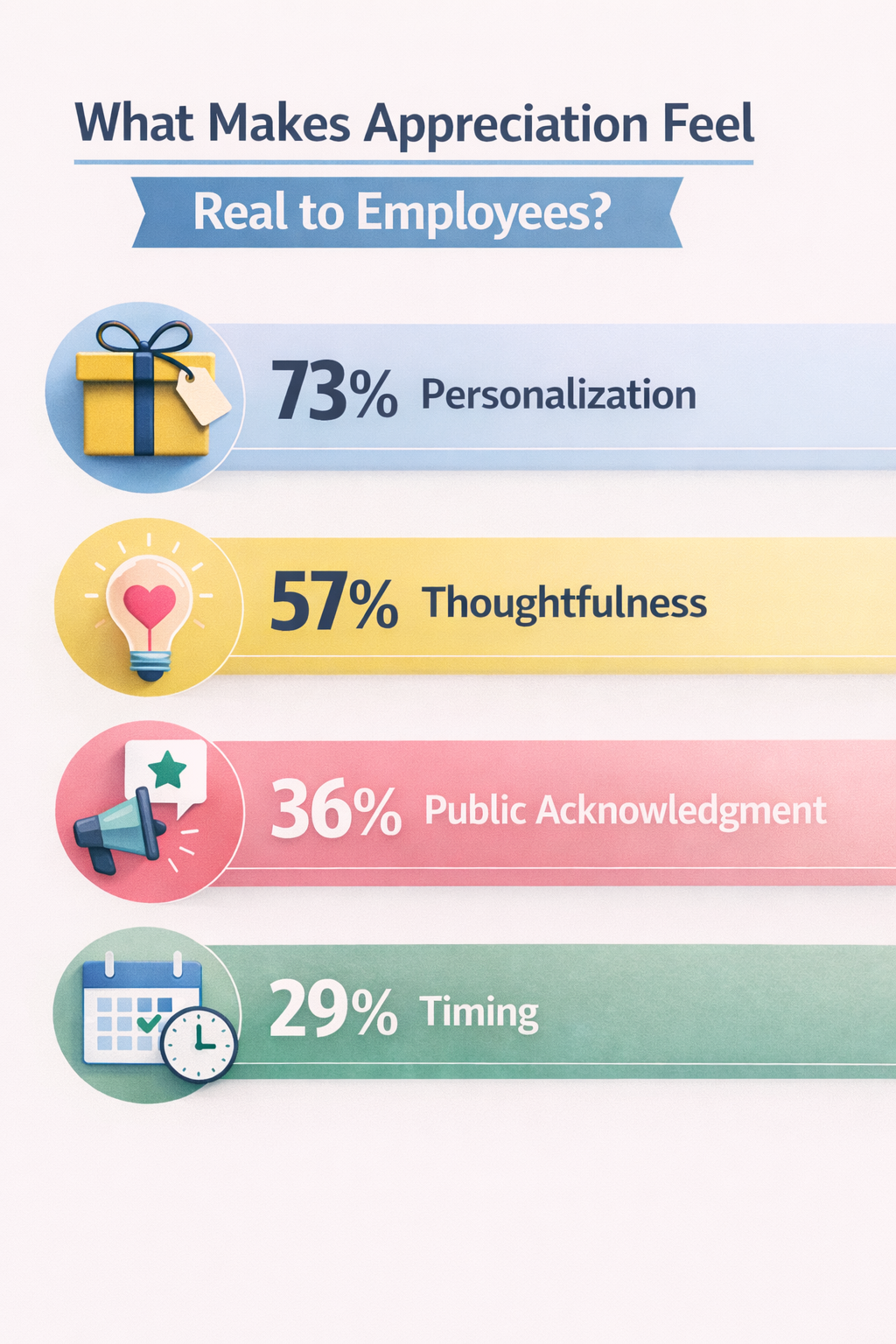
Employees are refreshingly clear about what makes appreciation feel real:
- 73% - Personalization
- 57% - Thoughtfulness
- 36% - Public Acknowledgment
- 29% - Timing
What does this mean? Generic programs do not motivate. Scalable personalization does. Recognition needs to feel human, not automated (even when it is automated behind the scenes).
Why Motivation Is a Business Metric (Not a Soft One)
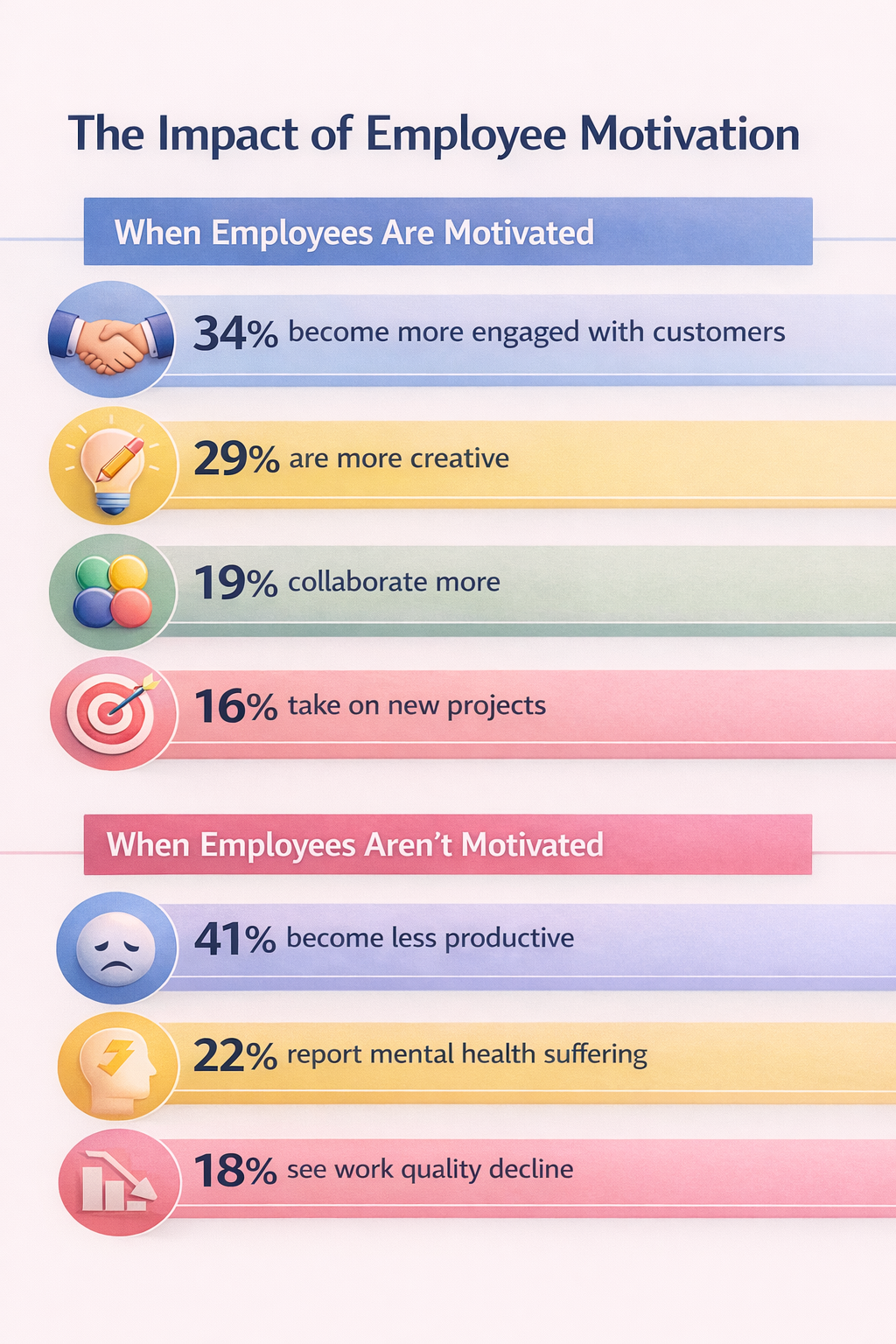
When employees are motivated:
- 34% become more engaged with customers
- 29% are more creative
- 19% collaborate more
- 16% take on new projects
When employees aren’t motivated:
- 41% become less productive
- 22% report mental health suffering
- 18% see work quality decline
Motivation directly impacts:
- Revenue-driving behavior
- Customer experience
- Productivity
- Retention
Employee Recognition is one of the fastest levers HR teams control that influences motivation at scale.
The ROI of Gifting: Why Employee Recognition Gifts Work
Employees draw a direct line between gifts and engagement.
From the study:
- 88% say gifts increase engagement and collaboration
- 84% believe companies should recognize contributions with gifts
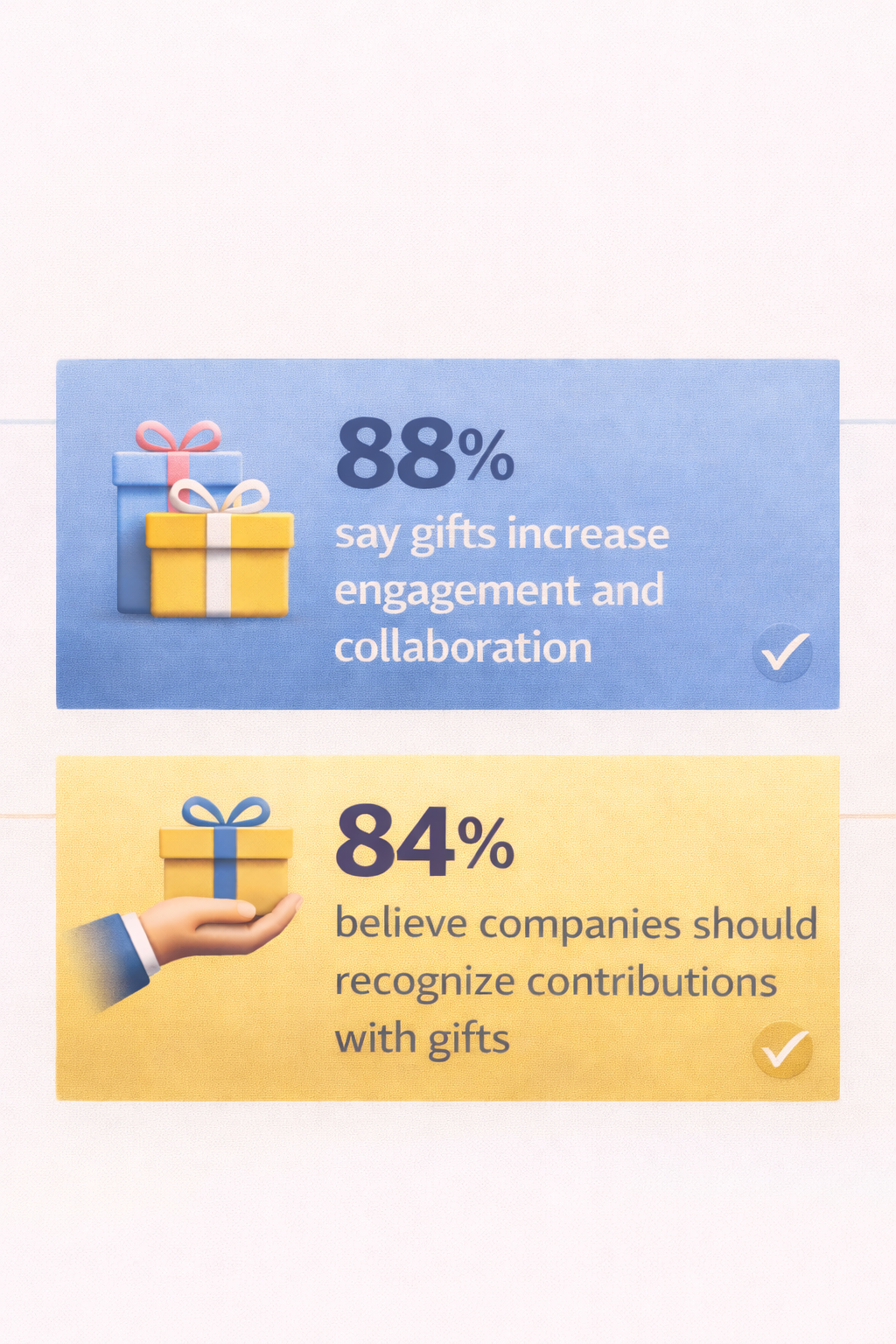
This is why employee recognition gifts outperform symbolic gestures. They’re tangible. Memorable. Shareable.
And yes, they also show up in productivity data later.
Retention: Where Appreciation Quietly Beats Compensation
Among employees with more than one year of tenure:
- Only 47% have ever received an anniversary gift
- 85% say one would make them feel appreciated
- 72% say it would make them more likely to stay
Top reasons why employees stay:
- 23% - feel appreciated and valued
- 21% - expect a raise
- 16% - economic uncertainty
- 12% - love their role/company
Appreciation beats pay expectations as a retention driver. That’s not sentimental. That’s a strategic lever well worth pulling.
Swag Isn’t Merch. It’s Culture Infrastructure.
Swag data from Snappy’s 2026 Workforce Study is very telling:
- 61% receive company swag
- 79% wear it
- 79% feel more connected to colleagues when they wear it
- 87% feel proud of their company when wearing it
- 71% wear it outside of work
Swag functions as:
- Culture reinforcement
- Employer branding
- Signal of belonging
- Recruitment and marketing tools
Why Employee Appreciation Day is Underutilized
- Employee Appreciation Day should be one of the easiest recognition moments of the year to get right.
It’s already on calendars. - Employees have expectations.
- Leadership attention is naturally higher in Q1
There’s no need to invent a new program or manufacture urgency.
And yet, only 40% of companies use it as an opportunity to solidify recognition efforts.
The gap isn’t about lack of intention. Most HR teams genuinely want to do more. It’s usually the result of:
- Competing Q1 priorities (planning cycles, kickoff, hiring goals)
- Limited budget clarity early in the year
- Recognition is being spread across too many tools or teams
- Appreciation living in the “nice to have” category instead of the “business-critical” one.
The result is that Employee Appreciation Day often becomes a last-minute Slack or Teams message. Or nothing at all.
The opportunity cost is real.
When a built-in recognition moment is skipped, companies lose more than goodwill. They miss a rare chance to:
- Set expectations for how appreciation will work all year
- Establish consistency early (before bad habits form)
- Signal what behaviors and contributions are valued
- Create emotional momentum that carries into performance, collaboration, and retention
In other words: ignoring Employee Appreciation Day lowers the engagement ceiling for the rest of the year.
Employee Appreciation Ideas For 2026
If you’re planning Q1 recognition, here are Employee Appreciation Day ideas grounded in what employees value:
Personalized Employee Appreciation Day Gifts: Let employees choose from curated Gift Collections. When employees get to pick their own gift, it’s personal, it’s something they actually want or need. This reinforces the power of the gifting moment.
Recognition That’s Visible: Public Acknowledgment Matters. Sharing kudos for extra effort, jobs well done, and new initiatives launched in town halls, internal newsletters, dashboards and team meetings shine a spotlight on individual contributions while tying them to larger company efforts.
Lifecycle Integration: Anniversaries (38%) and birthdays (20%) are the top moments when employees want to be recognized. These two milestones, along with Employee Appreciation Week, should all be part of a larger recognition system, not stand alone moments.
Onboarding Gifting: 80% of employees say an onboarding gift makes them feel part of their new company’s culture immediately. Welcoming new employees with branded merchandise featuring the company’s logo is one of the first steps in creating connection.
Swag People Actually Wear: Not a branded stress ball. Not another USB drive. Think about the things employees wear every day. Don’t skimp on quality. If you gift them swag that looks good and feels good, they’ll wear it proudly!
How Leading HR Teams Operationalize Appreciation
Modern organizations use gifting platforms to support:
- Employee Appreciation Week campaigns
- Automated Birthdays & Anniversaries
- Manager-initiated recognition
- Onboarding gifts
- Holiday gifting
- Global Distribution
- Reporting and ROI tracking
The result:
Recognition that doesn’t depend on memory, time, or Herculean effort from HR teams.
It simply runs.
What Strategic Gifting Requires
For gifting to drive results, it must be:
- Personal
- Fair
- Consistent
- Scalable
- Easy for managers
- Measurable for leadership
This is how appreciation becomes infrastructure.
Making the Case Internally
For CEOs:
Appreciation → Motivation → Performance → Revenue
For CFOs:
Recognition reduces attrition costs and increases productivity
For Managers:
Consistent recognition increases discretionary effort
Metrics to track:
- Engagement
- Retention
- Participation
- Manager adoption
- Performance indicators
Key Takeaways for HR Leaders
- Employee recognition is a business driver, not a perk
- Employee AppreciationWeek gifts measurably increase engagement and retention
- Swag strengthens culture and employer brand
- Lifecycle-based programs outperform one-off efforts
- Employee Appreciation Week is a strategic Q1 inflection point
Turn Employee Appreciation Week Into Year-Long Momentum
Employee Appreciation Week doesn’t need to be another task on your already-full checklist. When treated strategically, it becomes the foundation of a recognition system that:
- Motivates employees
- Improves retention
- Strengthens culture
- Supports performance
- Scales with your organization
Plan Employee Appreciation Week gifting today. Rewarding employees isn’t just a nice thing to do. It’s a good strategy.

