

Employees in 2026 are engaged in their work. They’re contributing, collaborating, and supporting their teams day to day. When that effort is recognized consistently and intentionally, it becomes a powerful driver of motivation, performance, and business success; and that’s where strong employee engagement programs make the difference.
Snappy’s 2026 Workforce Study, based on responses from U.S. employees across industries, takes a close look at how people feel about work today. From recognition and motivation to swag, gifts, and Employee Appreciation Day, the data paints a clear picture of what’s working and where companies have opportunities to unlock more impact.
The headline takeaway is encouraging: employees are showing up.
The opportunity lies in how organizations recognize and reinforce those efforts and whether they do so consistently enough to drive memorable business results.
Consistency Is the Differentiator
Employee recognition is on the rise. Nearly 70% of employees say their company increased recognition efforts in the past year, signaling that organizations understand its importance.
But that doesn’t tell the full story.
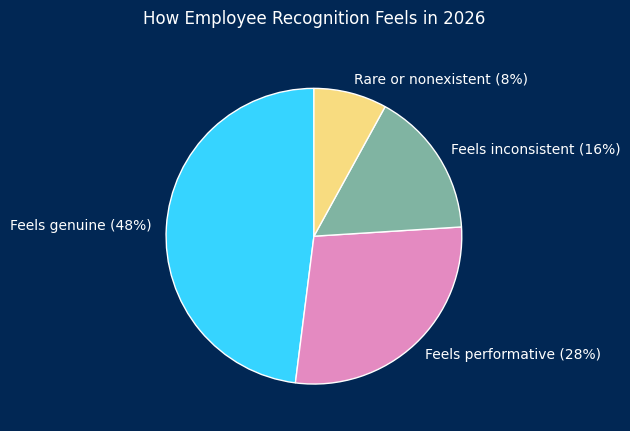
When asked how recognition feels at their company:
- 48% say it feels genuine
- 28% say it feels performative
- 16% say it’s inconsistent
- 8% say it’s rare or nonexistent
Recognition exists, but it’s not dependable.
What makes recognition feel meaningful?
Among employees who say recognition from their companies feels genuine:
- 73% point to personalization
- 57% cite thoughtfulness
- 36% say public acknowledgement matters
- Timing and who recognition comes from also play a role
What this tells us
Employees don’t want more recognition for recognition’s sake. They want recognition that feels intentional, human, and relevant. Employee engagement programs that prioritize consistency and personalization outperform one-off generic gestures.
Motivation Is Where Engagement Turns Into Performance
Motivation is one of the clearest bridges between employee engagement and business results.
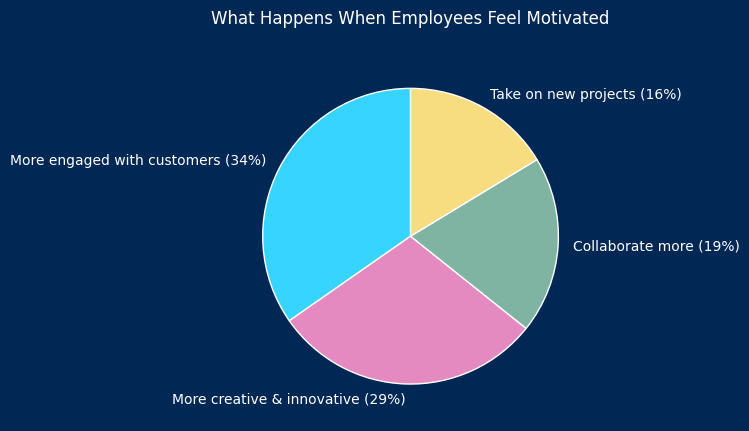
When employees feel motivated:
- 34% are more engaged with customers
- 29% are more creative and innovative
- 19% collaborate more
- 16% take on new projects
When motivation drops, the impact is immediate:
- 41% become less productive
- 18% say their quality of work declines
- 22% say their mental health suffers
The biggest contributors to low motivation include:
- Feeling invisible or undervalued (25%)
- Poor management (16%)
- Lack of career progression (16%)
- Too many meetings (13%)
Why this combination matters
Employees are interested in their work, managers are present, and effort is being made. With the right engagement program in place, companies can translate that everyday effort into sustained motivation and performance.
The State of Work in 2026
To understand employee engagement in 2026, it helps to zoom out. Engagement doesn’t exist in a vacuum. It’s shaped by how people work, who they work with, and how connected they feel day to day.
Work is Still Deeply Social
Despite changes in how we work, relationships remain central to the employee experience:
- 80% say they have coworkers they consider friends
- 72% say they have long-term friends they originally met at work
- Nearly 30% say they’ve dated someone they met at work
What this means
Work continues to be a primary source of connection and belonging. Engagement programs that reinforce shared experiences and appreciation build on something employees already value.
Most Employees Feel Valued, But Not Everyone Does
When asked how they view themselves at work:
- 67% feel like a valued contributor
- 22% feel like a replaceable resource
- 11% feel like a cog in the machine
This is where recognition plays a defining role. For employees on the margins of feeling seen, consistent recognition often determines whether they feel valued in practice, not just in theory.
Many Employees Are Doing More With Less
- 49% say they’ve taken on additional responsibilities because roles on their team were eliminated
As roles expand, recognition must keep pace. Employee engagement programs that acknowledge evolving responsibilities help employees feel supported as work changes.
Where Are We Working?
Current work models:
- 68% in-person
- 12% in remote
- 20% hybrid
Preferences:
- 55% prefer in-person
- 18% prefer remote
- 28% prefer hybrid
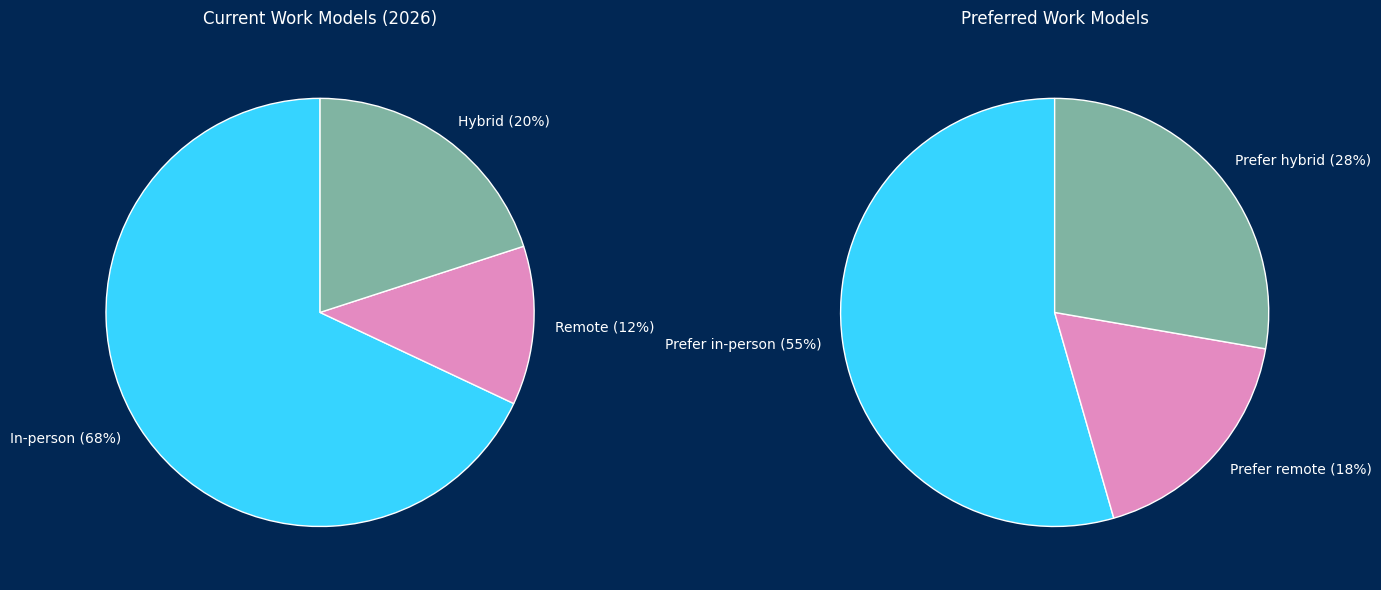
Recognition needs to travel across work models and global locations. Employee engagement programs that combine digital gifting, visible appreciation, and shared moments help unify teams wherever they work.
Work Doesn’t End When the Day Does
Employee Engagement in 2026 also reflects how work fits into the rest of life, and for many employees, the fine line between the two is increasingly blurred.
Nearly 64% of employees say that they regularly respond to emails, messages, or work notifications after traditional work hours. At the same time, 77% report that their manager actively tries to support work-life balance.
These two realities coexist.
Many employees are choosing to put in discretionary effort: answering a late message, helping a teammate after hours, or keeping projects moving outside the confines of a typical workday. That effort is often invisible, but it’s meaningful.
What this means
When employees give effort beyond what’s required, recognition carries extra weight. Acknowledging that contribution with a gift helps reinforce that the effort is seen, valued, and not taken for granted.
This is where structured employee engagement programs matter most. Without consistency, recognition becomes dependent on individual managers or moments of awareness. With consistency, it becomes part of how work gets acknowledged across teams, roles, and time zones.
In environments where workloads fluctuate and boundaries shift, recognition is one of the few tools that can re-center employees around purpose and contribution. It provides clarity in moments when work feels expanded, stretched, or simply nonstop.
The opportunity for companies
Companies that build engagement programs designed to recognize effort, not just outcomes, are better positioned to sustain motivation over time. They don’t rely on good intentions. They create systems that surface appreciation regularly and reinforce it at the moments employees are most likely to feel the weight of their work.
In 2026, engagement isn’t just about whether employees are working hard. It’s about whether that effort is consistently acknowledged in ways that keep people motivated to continue pushing forward.
Swag Makes Appreciation Visible and Repeatable
Company swag is often treated as an afterthought. Employees see it differently.
- 61% receive company swag
- 79% wear it
- 71% wear it outside of work
- 79% say it increases connection to colleagues
- 87% say it strengthens pride in their company and mission
Wearing swag is a choice. Employees wear items that fit into their lives and reflect how they feel about their workplace.
The fact that three in four employees wear swag on weekends turns internal appreciation into external brand visibility. High-quality swag that employees want to wear becomes a billboard for your brand.
What this means
Swag isn’t just merchandise. It’s a visible, repeatable signal of belonging and appreciation, one that extends recognition beyond a single moment.
Engagement Is Strong. Recognition Drives Results.
Most employees report feeling engaged and connected to their work. At the same time, recognition gaps remain common.
When asked how much of their work goes unrecognized:
- 39% say up to 25%
- 26% say up to 50%
- 17% say most or all of their work goes unnoticed
The good news? Manager relationships are strong.
- 71% of employees connect with their manager daily
- Most others connect weekly or monthly
- 77% say their manager actively supports work-life balance
The opportunity? Managers are present. With the right tools and programs, that presence can translate into more consistent, meaningful recognition that fuels motivation.
What’s most striking in the data isn’t a lack of effort or interest from employees. It’s the gap between contribution and acknowledgement. When recognition is sporadic, employees continue working, but with less energy, creativity, and effort. When recognition is consistent, it amplifies what’s already working and turns engagement into sustained momentum.
Recognition Matters Most When It Comes From Managers
When asked whose appreciation matters most:
- 40% say their direct manager
- 26% say peers
- Fewer cite executives or customers
This reinforces a consistent theme: recognition works when it’s personal, timely, and connected to the work that’s being done.
Employee Gifting Powers Engagement and Collaboration
Employees clearly connect gifts to how they feel and how they work.
- 88% say gifts increase engagement and collaboration
- 84% believe companies should recognize contributions with gifts
When employees receive a gift, they most often report feeling:
- Appreciated (61%)
- Motivated (17%)
- Seen as a person, not just a worker (10%)
Employees most want to be recognized with gifts on:
- Work anniversaries (38%)
- Birthdays (20%)
- Promotions. milestones, and 'just because' moments
Work anniversaries stand out as one of the most important recognition opportunities for long-term engagement and retention. According to the study, 72% of employees say receiving a work anniversary gift from their employer would make them more likely to stay at their company.
This finding reinforces how employee engagement programs influence more than just morale. Consistent recognition tied to meaningful milestones helps employees feel valued over time, strengthening connection, motivation, and long-term commitment to the organization.
The takeaway
When used intentionally, gifting remains one of the most effective tools for reinforcing appreciation and driving engagement.
Employee Appreciation Day Is an Opportunity
Employee Appreciation Day (March 6, 2026) remains surprisingly underused as an employee engagement moment.
- Only 40% of employees say their company celebrates it
For organizations looking to activate recognition early in the year, this represents a clear, low-friction opportunity to engage employees at scale.
Engagement is Present. Strategy Unlocks Impact.
The takeaway: Employees in 2026 are engaged, collaborative, and invested in their work. The challenge for companies is creating consistency around how they recognize those efforts.
The data shows:
- Recognition drives motivation
- Motivation drives performance
- Gifting and swag make recognition tangible, visible, and repeatable
- Consistent employee engagement programs outperform ad hoc recognition
Bottom line
The companies seeing the strongest results aren’t doing more recognition. They’re doing it better with programs that are intentional, consistent, and designed to turn employee effort into measurable success.

