
Every company wants stronger employee engagement.
It’s a hot topic in all-hands agendas.
It’s heavily featured in every HR slide deck.
We try to figure out how to increase it by surveying employees.
It’s often the reason someone schedules “virtual bingo” for a Thursday afternoon activity.
(To be clear, virtual bingo has its place. It’s just not a long-term engagement strategy.
It’s not that companies aren’t trying. It’s that most engagement strategies aren’t built to last.
Real engagement doesn’t come from one-off initiatives or feel-good moments.
It comes from consistent, meaningful experiences that employees notice and remember.
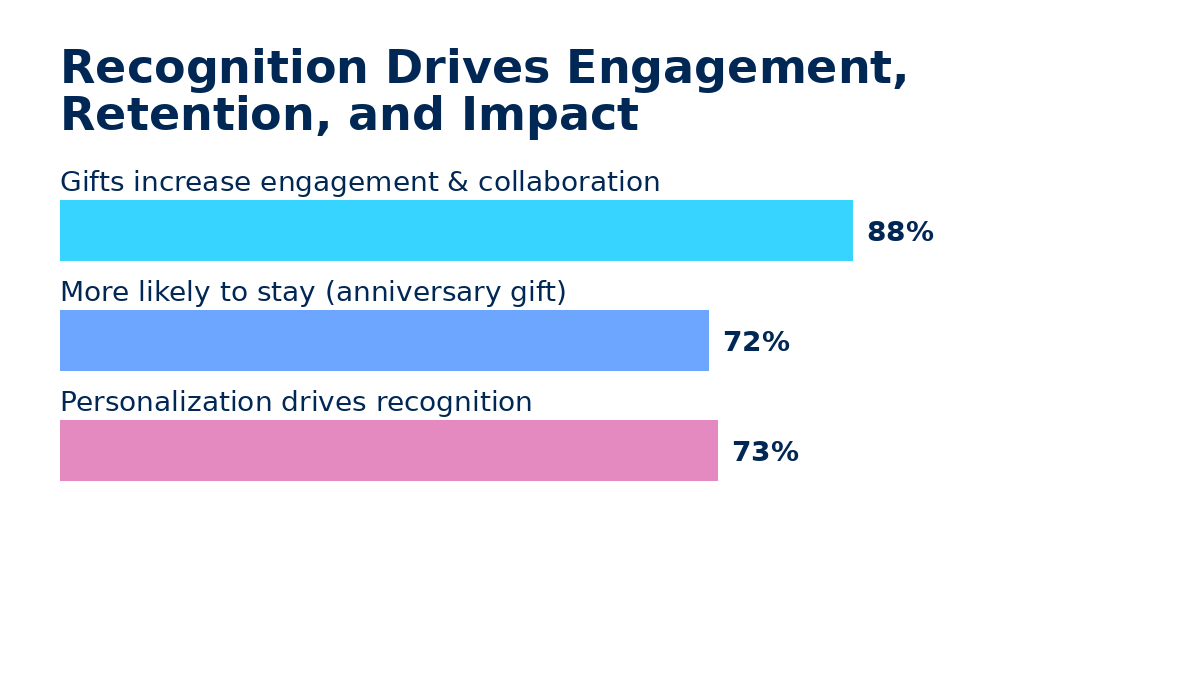
And the data from Snappy’s 2026 Workforce Study backs it up:
- 88% of employees say gifts increase engagement and collaboration
- 72% are more likely to stay with their company when they receive an anniversary gift
- Personalization is the #1 driver of meaningful recognition (73%).
In this guide, you’ll learn:
- What actually drives employee engagement (and what doesn’t)
- How to tell if your current efforts are working
- 7 practical strategies that go beyond surface-level perks
- Why recognition, and how you deliver it, matters
Why Most Employee Engagement Strategies Fail
Before we get to what works, it’s worth calling out what doesn’t.
Most engagement efforts fail because they’re:
- Inconsistent (big push, then nothing, then a big push again)
- Generic (one-size-fits-all gifting)
- Disconnected from real moments
The truth? These things make engagement feel more like a campaign than a culture.
The companies that get this right don’t treat engagement like an event.
They treat it like a system.
What Is Employee Engagement?
Employee engagement isn’t about free snacks or a ping-pong table. It’s about how connected, motivated, and committed employees feel to their work and your organization’s mission.
Engaged employees aren’t just satisfied, they’re psychologically invested in their work and motivated to contribute to business outcomes and company goals. Research from Gallup shows that engagement reflects how involved and enthusiastic employees are about their jobs and workplace.
That investment is shaped by everyday signals employees receive about whether their contributions matter. Recognition, especially when it’s personal and tangible, is one of the clearest ways organizations can communicate that value.
Unfortunately, even though everyone agrees that employee engagement is important, the stats show that despite all the attention, employees just aren’t engaged.
According to Gallup, only 21-32% of global workers are engaged at work. This means that the majority of employees are either not engaged or actively disengaged.
That’s not just a workplace culture problem; it’s a productivity problem. It’s also a frustrating one, because engagement can feel difficult to influence without the right tools, buy-in, or support.
The Three Drivers of Employee Engagement
Most engagement strategies fall into three categories:
- Recognition (feeling valued)
- Connection (feeling part of a team)
- Growth (feeling progress and purpose)
The strongest programs consistently reinforce all three.
Why Engagement Matters To Business Performance
The most important thing you need to know is that engagement isn’t a nice-to-have. It has a measurable impact on business outcomes.
The challenge for HR teams isn’t understanding that engagement matters; it’s knowing which actions reliably influence it at scale. Recognition programs, particularly those tied to meaningful moments, are one of the levers HR can directly control.
This is especially important as HR teams plan for 2026, including moments like Employee Appreciation Week (starting March 6, 2026), which offers a timely opportunity to recognize employees in a way that feels intentional.
How Engagement Drives Productivity & Profitability
Companies with engaged workers see:
- Higher productivity: engaged teams outperform others in how much they get done.
- Higher profitability: organizations with high engagement levels often post stronger financial results.
Engagement also influences quality of work, collaborative effort, and how employees show up for customers, all of which are hard to measure but impossible to ignore.
Not so fun fact
Disengaged workforces have been estimated to cost the global economy hundreds of billions in lost productivity. Gallup reported that worldwide declines in engagement contributed to roughly $438 billion in lost productivity in one year alone.
How Engagement Improves Retention
Engaged employees don’t just perform better, they stay longer. Snappy’s 2025 Workforce Study
shows that 67% of employees would stay in their roles longer if their work anniversary was recognized with a gift, making gifting a clear retention strategy, not just a morale booster. Yet, milestones like work anniversaries are often overlooked or reduced to a generic email or Slack message. That’s a missed opportunity. Thoughtful anniversary gifts turn these moments into meaningful touchpoints that strengthen retention.
Personal milestones like work anniversaries mark an employee's ongoing commitment to the organization and provide a natural touchpoint for recognition that feels both personal and professional.
When companies acknowledge tenure with intention, they reinforce a sense of belonging and strengthen the emotional connection between employees and their employer.
From a business perspective, this matters. Hiring, onboarding, and ramping new employees is expensive, not just in direct costs but in lost productivity, institutional knowledge, and team momentum. Organizations that invest in consistent engagement and recognition strategies aren’t just improving morale; they are making a retention play. Thoughtful recognition at key moments like work anniversaries helps organizations retain experienced employees, reduce avoidable turnover, and protect the investment they’ve already made in their people.
When organizations systemize recognition through gifting at key milestones, they reduce attrition risk in a way that’s proactive rather than reactive.
How Engagement Reduces Absenteeism and Improves Well-Being
When employees feel recognized and valued, they’re more likely to show up consistently, both physically and mentally. Over time, stronger engagement contributes to lower burnout, improved well-being, and more resilient teams that can sustain performance through periods of change.
Recognition doesn’t eliminate stress, but it does help employees feel supported, especially during demanding or uncertain periods.
What Employee Engagement Isn’t
Before we get into employee engagement tactics, we need to dispel a few myths.
Employee engagement is not:
- Just employee satisfaction
- A one-time survey
- Free snacks, virtual games, or quarterly pizza lunches
Satisfaction might make employees feel happy. Engagement makes them feel invested. Satisfaction doesn’t always mean someone will go the extra mile. Engagement does.
This distinction is important. Engagement fuels motivation, commitment, and collaboration, not just happiness.
How to Tell If Your Employee Engagement Programs Are Working
If engagement feels hard to define, it can feel even harder to measure.
Here are the signals your engagement efforts are actually making an impact:
- Participation rates in key programs are rising
- Survey scores improve over time
- Turnover and absenteeism trends improve
- Performance and productivity metrics trend upwards
If your programs are well-intentioned but underused, or engagement spikes briefly and then fades, that’s a signal too…and it’s one that many HR teams recognize all too well.
The most effective engagement strategies share one thing in common: they make employees feel seen in real moments. Programs that rely solely on surveys or surface-level perks tend to fade. Strategies rooted in recognition and reinforced through thoughtful gifting compound over time.
7 Employee Engagement Strategies That Actually Work
Here are practical ways to improve employee engagement, beyond quarterly pizza lunches.
- Tie Engagement to Meaningful, Tangible Recognition
Recognition isn’t just a 👍 on Slack. It’s a behavioral reinforcement tool.
It becomes significantly more effective when it moves from symbolic to tangible. This is where recognition becomes more impactful, when it’s tangible and tied to real moments.
When employees receive meaningful recognition in the form of a gift, especially in the moment of accomplishment, it reinforces the behaviors you want to see more of. Snappy’s 2025 Workforce study shows that strategic, high-quality recognition significantly improves retention, motivation, and collaboration.
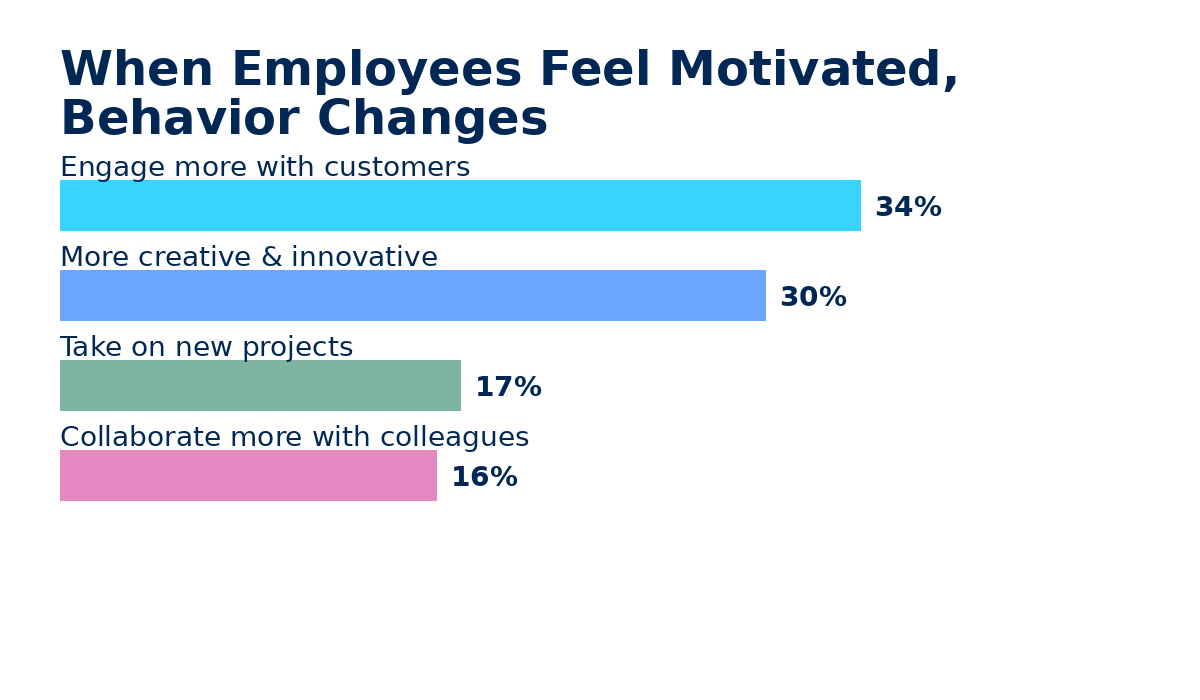
When employees feel motivated:
- 34% engage more deeply with customers and clients
- 30% become more creative and innovative
- 17% are more willing to take on new projects
- 16% are more likely to engage in collaborative work with colleagues
On the flip side, a lack of recognition has significant consequences:
- 42% of employees reported being less productive when they don’t feel appreciated
- 30% identified feeling invisible or undervalued as a primary reason for losing motivation
- 10% say a lack of recognition is a key factor in disengagement
For HR leaders, the takeaway is clear: recognition isn’t a “nice to have,” it’s a measurable driver of engagement and performance. When recognition is timely, thoughtful, and tied to real moments, it becomes a more powerful lever for shaping culture, sustaining motivation, and keeping employees invested in their work.
- Celebrate Small Wins
Don’t reserve recognition for just the big milestones.
Employees will notice when you celebrate:
- Early Successes
- Extra Effort
- Collaboration across teams
- Helpful-problem solving
Small wins create big momentum over time.
Consistently acknowledging these moments signals that progress matters, not just outcomes. Over time, this kind of recognition builds confidence, reinforces positive behaviors, and encourages employees to keep showing up with intention. When small wins are recognized regularly, they compound into stronger engagement, better performance, and a more connected team.
- Give Employees Choice in Recognition
Generic rewards feel….generic.
Engagement improves when employees have real choice in how they’re recognized, whether it’s an experience, a luxury item they’ve wanted for a long time, or the opportunity to donate to a charity they support.
Giving choice sends a clear message: “We see you as an individual.”
Choice removes the guesswork from recognition and reduces the risk of rewards missing the mark. It also respects the wide range of employee preferences, lifestyles, and values. When recognition feels personal rather than prescriptive, employees are more likely to feel genuinely appreciated and engaged.
- Empower Managers With Engagement Tools
Managers are the front line of engagement. Giving them access to tools that support employee recognition helps make appreciation part of everyday work, not an extra task on the “to do” list.
According to Snappy’s 2025 Workforce Study, 40% of employees said that appreciation from their direct manager is the most meaningful.
Managers have the day-to-day visibility into employee effort, progress, and challenges, which puts them in the best position to recognize meaningful contributions in real time. When managers are equipped with consistent ways to recognize their teams, appreciation becomes part of how work gets done. It’s not something extra that needs to be planned and organized. That consistency strengthens trust, improves morale, and reinforces a culture where employees feel seen by the people who matter most to them at work.
Make it easy for managers to:
- Share timely appreciation
- Hold meaningful 1:1s
- Connect recognition to goals
- Build Engagement Into the Employee Lifecycle
Engagement isn’t something you do once.
Programs that touch multiple events, from onboarding to milestones, anniversaries, and holidays, create a sense of ongoing care and connection, especially when supported by employee appreciation gifts that employees actually want.
A well-timed gift to celebrate a work anniversary or personal accomplishment can reinforce belonging, which increases motivation, collaboration, and connection.
This lifecycle approach helps engagement feel consistent rather than reactive, and prevents recognition from being a once-a-year scramble.
- Communicate Recognition Clearly and Consistently
Communication is one of the strongest HR strategies to improve engagement. Employees who understand how their work connects to broader goals are more motivated and committed. Open transparent communication builds trust, a foundational element of engagement.
Recognition loses impact when it’s invisible. Sharing wins helps reinforce values and shows employees what success looks like.
- Use Employee Engagement Data To Improve Results
Employee engagement surveys are very valuable. They provide data that reveals what’s working, what’s not, and why.
Measure regularly. Review trends. Act on insights. Repeat.
Engagement improves fastest when data is paired with action. Not when it lives in a slide deck.
Why Gifting Is An Effective Engagement Strategy (Not Just a Perk)
As you’ve been reading this post, you’ve noticed one theme that keeps resurfacing: engagement improves when recognition is personal, timely, and meaningful. Gifting brings all three together in a way few other engagement tools can. When done thoughtfully, employee gifting programs make recognition tangible, personal, and measurable.
Gifting:
- Makes appreciation tangible
- Reinforces desired behaviors
- Let employees choose what matters to them
- Strengthens emotional connection
- Can be tied to real performance outcomes
Snappy’s 2026 Workforce Study shows that recognition tied to meaningful moments and personalized choice, including gifting, leads to stronger retention and engagement outcomes compared with generic rewards.
Gifting isn’t a perk. It’s a business performance driver.
Employee Appreciation Day 2026: A Moment That Matters
Snappy helps HR teams turn appreciation from a “once in a while” gesture into a consistent, scalable strategy through thoughtful employee gifting tied to moments that matter.
With Snappy, you can:
- Send thoughtful gifts linked to moments that matter
- Give employees choice in how they’re rewarded
- Streamline the recognition process so managers actually use it
- Track gifting programs and tie them to engagement outcomes
- Support distributed and global teams without logistical headaches
For HR teams managing engagement across locations, roles, and time zones, this kind of stability matters.
At a time when fluctuating engagement levels can negatively impact business success, having tools to make appreciation and recognition seamless and scalable is a competitive advantage.
What High-Performing Companies Do Differently
- Recognize consistently
- Personalize at scale
- Reinforce behavior
Final Thought: Don’t Make Engagement Complicated. Make It Consistent.
Employee engagement shouldn’t be about gimmicks or games.
It’s about people:
- Feeling seen
- Feeling appreciated
- Feeling connected
- Feeling valued
That’s what drives motivation, improves productivity, and ultimately supports business results.
When you pair consistently thoughtful and meaningful appreciation with actionable HR strategies, including gifting, you create a company culture where people don’t just show up, they show up fully.

