
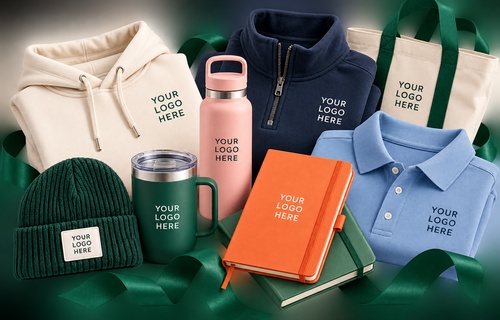
Holiday Swag for Distributed Teams: How to Personalize Company Gifts at Scale
We’ve all seen company swag.
A lot of it is very, very bad.
If you're in charge of your company's holiday swagy, you know the goal is to create something that employees want, wear, and use.
This can be stressful when you want the company holiday swag to feel like a gift, not a giveaway.
If you're wondering what employees want from their swag, this article will help.
According to Snappy's 2026 Holiday Gifting Survey of 1,500 U.S. employees, quality and usefulness are the two most frequently selected qualities that make company swag something employees actually want to use, each selected by 44% of respondents. Style followed at 34%.
For distributed teams, delivering on those expectations introduces another challenge: how do you offer swag that feels personal when employees have different sizes, styles, climates, locations, and preferences, without creating a massive operational project?
Good news. The answer isn't to get better at guessing.
The answer is to build more choice into the program.
The best holiday swag for distributed teams gives employees flexibility to choose something they'll use while giving companies control over budget, branding, fulfillment, and inventory.
When done right, everyone gets what they want: employees get great swag, and your team doesn't spend January wondering what to do with 47 leftover quarter-zips that never made it to their intended recipients.
How Do You Send Holiday Swag to Distributed Employees?
The best way to send holiday swag to distributed employees is to create a centralized program that gives recipients choice while managing sizing, addresses, fulfillment, and delivery across locations.
Instead of buying one product in bulk and predicting what everyone wants, companies can use on-demand swag, curated merchandise options, or branded swag stores that let employees choose what works for them.
For international teams, a global gifting solution can also help companies manage regional product availability and fulfillment without creating a separate holiday swag program for every country.
The shift is simple:
Don't try to personalize by guessing better. Personalize by giving people better choices.
What Makes Holiday Swag Work for Distributed Teams?
The best holiday swag for remote and distributed employees has six characteristics:
- Useful: It's something people will actually use.
- High quality: The product feels like a real gift, not a giveaway.
- Personal: Recipients have options that reflect different preferences.
- Flexible: The program accounts for sizes, climates, and locations.
- Scalable: It works whether you're gifting 50 employees or 5,000.
- Inventory-conscious: You aren't left with boxes of unused merchandise in January.
These aren't just nice-to-haves.
Snappy's 2026 Holiday Gifting Survey found that 44% of employees prioritize quality when deciding whether company swag is something they want to use, while another 44% selected usefulness. Style was selected by 34%.
Employees are evaluating company swag the same way they evaluate the other products they own.
As we explored in our guide to the best holiday swag ideas and trends for 2026, the best branded gifts start with the recipient, not the logo.
The Biggest Holiday Swag Mistakes Companies Make With Remote Teams
Distributed teams make a few traditional swag practices particularly risky.
1. Ordering the Same Item for Everyone
Your employees aren't identical. Their swag probably shouldn't be either.
In Snappy's 2026 Holiday Gifting Survey, 44% of employees said giving every employee the same gift feels outdated.
One product may not suit different climates, lifestyles, jobs, tastes, or work environments. Giving people options creates a consistent holiday program without forcing everyone to receive the same thing.
2. Guessing Employee Sizes
Do not do this.
Apparel can make fantastic holiday swag. But ordering it before employees select their own sizes can leave you with stressful decision making, disappointed recipients, and leftover inventory.
3. Prioritizing the Logo Over the Product
A giant logo cannot transform an unappealing product into something people want.
Ask whether you'd want the item if the logo weren't there. At Snappy, we call it the No Logo Test.
If the answer is no, you haven’t found the right product yet.
4. Ignoring Geography
A puffer jacket may be ideal holiday swag for your team in Chicago.
Less compelling for the team in Miami.
Distributed swag programs should account for climate, regional availability, shipping requirements, and local preferences rather than assuming one product works everywhere.
5. Ordering Too Much Inventory
Ordering extra quantities can feel safer.
Until January arrives and you discover that “extra” means 126 unused water bottles occupying a surprisingly large portion of a storage room.
On demand production and recipient choice can reduce the need to predict demand before employees have selected anything.
6. Starting Too Late
Customization, production, and global fulfillment require time.
Holiday swag works better when the plan begins before the holiday party invitation hits everyone's calendar.
Why Does Personalization Matter for Distributed Employee Swag?
Distributed workforces are naturally diverse.
Employees may live in different climates, work in different environments, have different lifestyles, wear different sizes, and want completely different things from company swag.
The more diverse the audience becomes, the harder it is for one person in HR or Marketing to accurately choose one product everyone will love.
Snappy's 2026 Holiday Gifting Survey found that 43% of employees say a good holiday gift “feels personal to me.”
That's where recipient-choice gifting becomes particularly useful.
Instead of trying to personalize holiday swag by manually selecting a different item for every employee, companies can personalize through choice.
The company controls the budget, branding, available merchandise, and overall experience. Employees choose the option that suits them.
Personalization at scale doesn't have to mean knowing exactly what every employee wants.
Sometimes it means giving them good choices and letting them tell you.
What Is the Best Holiday Swag for Distributed Teams?
The best holiday swag for distributed employees tends to be useful, high-quality, easy to distribute, and flexible enough to suit different lifestyles.
Premium Apparel
Think high-quality hoodies, quarter-zips, jackets, polos, hats, and athleisure.
Why it works: Great apparel can become something employees wear well beyond work.
Watch out for: Sizing and climate differences.
Choice helps when: Employees can select both the product and their own size.
Bags and Travel Gear
Backpacks, totes, duffels, organizers, and travel accessories can work across jobs and locations.
Why it works: They're useful for commuting, travel, gym trips, and everyday life.
Watch out for: Over-branding something employees might otherwise use outside work.
Drinkware
High-quality bottles and tumblers remain popular for a reason.
Why it works: They're practical across remote, hybrid, and office environments.
Watch out for: People already own a lot of drinkware. Quality matters.
Useful Tech
Portable chargers, speakers, earbuds, and everyday tech accessories can have broad appeal.
Why it works: Good tech solves an actual problem.
Watch out for: Regional compatibility and fulfillment.
Wellness Products
Fitness, recovery, relaxation, and self-care products can provide alternatives to traditional office swag.
Why it works: They're relevant to life outside of work.
Choice helps when: Employees have very different ideas about what “wellness” means.
Home and Desk Accessories
Useful items for home offices, desks, kitchens, and everyday living can work particularly well for remote employees.
The rule across every category is simple:
Would someone choose this for themselves?
For more product inspiration, see our full guide to 2026 holiday swag trends.
How Do You Personalize Holiday Swag at Scale?
The most scalable way to personalize company swag isn't creating thousands of individually customized orders.
It's creating controlled choice.
Let Employees Choose Their Swag
Recipient choice reduces the need for administrators to guess individual preferences.
Employees choose what they want. Companies maintain control over budget, branding, and available options.
That can reduce mismatched products, incorrect sizes, and unwanted swag.
Use Curated Collections Instead of One Fixed Item
A curated selection creates a middle ground between “everyone gets this sweatshirt” and “HR personally shops for 2,000 people.”
Offer several carefully selected options within the same budget and let employees choose.
This is particularly relevant given that 44% of employees in Snappy's 2026 Holiday Gifting Survey say giving everyone the same gift feels outdated.
Match Swag Choices to the Audience
Not every employee needs to see the same selection.
Depending on your program, choices can be curated around:
- Region
- Role
- Team
- Budget
- Employee milestone
- Program or occasion
Keep Branding Thoughtful
The goal isn't to fit the largest possible logo onto every available surface.
Subtle, well-designed branding can make merchandise feel connected to the company without turning the recipient into a walking billboard.
Great swag should feel good enough to wear or use on a Saturday.
That's the test.
How Do You Avoid Swag Sizing, Shipping, and Inventory Headaches?
For distributed teams, the operational model matters almost as much as the product.
Sizing: Let employees select their own apparel sizes rather than having administrators guess.
Shipping: Build in sufficient production and delivery time, particularly for international recipients.
Inventory: Consider On Demand swag when you don't want to commit to large quantities upfront. Products can be produced after they're selected rather than sitting in inventory waiting for someone to want them.
Addresses: Use a gifting experience that lets recipients provide their own delivery information rather than requiring HR to collect and maintain home addresses.
Global fulfillment: If employees are distributed internationally, evaluate actual regional product availability and fulfillment, not simply whether a vendor says it “ships globally.”
For distributed teams, reducing these operational steps can be just as important as choosing the right merchandise.
Bulk vs. On-Demand vs. Swag Stores: Which Is Best?
The best way to send company swag depends on how predictable your audience and demand are. Bulk swag, on-demand swag, and branded swag stores each work best for different types of programs.
When Should You Use Bulk Swag?
Bulk swag is best when you know what you're ordering, how many items you need, and when you'll need them.
It works particularly well for fixed campaigns, events, curated kits, or holiday programs where everyone receives the same premium item.
Because products are ordered in advance, bulk swag typically requires more upfront inventory and planning. It can also create more sizing risk if you're ordering apparel before employees confirm their sizes.
Best for: Known quantities, fixed campaigns, premium gifts, and curated kits.
When Should You Use On-Demand Swag?
On-demand swag is best when employee preferences or sizes vary and you don't want to commit to inventory before you know what people want.
Instead of estimating how many small, medium, large, and extra-large sweatshirts you'll need, employees can select their preferred product and size before it is produced.
That makes On Demand swag particularly useful for distributed teams, where sizing, preferences, and locations can vary considerably.
Best for: Distributed teams, uncertain demand, recipient choice, and reducing upfront inventory.
When Should You Use a Swag Store?
A branded swag store is best when you want an ongoing, self-service way for employees to choose company merchandise.
Rather than creating a new swag order every time a team or employee needs something, a branded swag store gives recipients access to a curated selection of merchandise.
Stores can be especially useful for organizations with multiple teams, locations, or ongoing swag needs because employees have more flexibility while the company maintains control over the available products and brand experience.
Best for: Ongoing programs, multiple teams or regions, employee choice, and scalable self-service.
Which Swag Model Is Best for Distributed Teams?
For distributed teams, on-demand swag and swag stores generally provide more flexibility when sizes, preferences, and demand are difficult to predict. Bulk swag can still work well when companies know exactly what they need and want everyone to receive the same item or kit.
The question isn't just:
“What swag should we buy?”
It's also:
“What's the smartest way to get it to our employees?”
How Early Should You Plan Holiday Swag for Distributed Teams?
Companies should begin planning distributed-team holiday swag several months before the holidays, particularly when custom or bulk merchandise is involved.
A simple planning framework:
September: Determine audience, budget, regions, and whether you'll use bulk, on-demand, or a store.
October: Finalize merchandise, branding, personalization, and program setup.
November: Launch your Collection or store, or begin distribution.
Early December: Follow up with employees who haven't selected or claimed their swag.
Late December: Resolve delivery issues and review program performance.
Exact production deadlines depend on the merchandise and fulfillment model, so confirm timing before committing to a program.
For the broader holiday planning process, use Snappy's corporate holiday gifting planning timeline.
How Do You Measure Whether Holiday Swag Worked?
“Everything got shipped” is useful information.
It's not the only measure of success.
Depending on the program, companies can evaluate:
- Selection or redemption rate
- Delivery completion
- Recipient satisfaction
- Product preferences
- Employee feedback
- Leftover inventory
- Program spending
- Administrator time
- Repeat use of merchandise
A good swag program shouldn't just produce more stuff.
It should produce merchandise people actually want to keep and use while making the program manageable for the teams running it.

